How We Build Custom Homes in the Tri-Cities, WA
Building a custom home is one of the biggest decisions you’ll ever make. We don’t take that lightly. Here’s how we actually work — every stage, every conversation, every decision — from your first phone call to the day you move in.
9 Stages in our process
From first call to keys in hand
8- 10 Months, total timeline
Not 12–18 like the big builders quote
80 Years combined experience
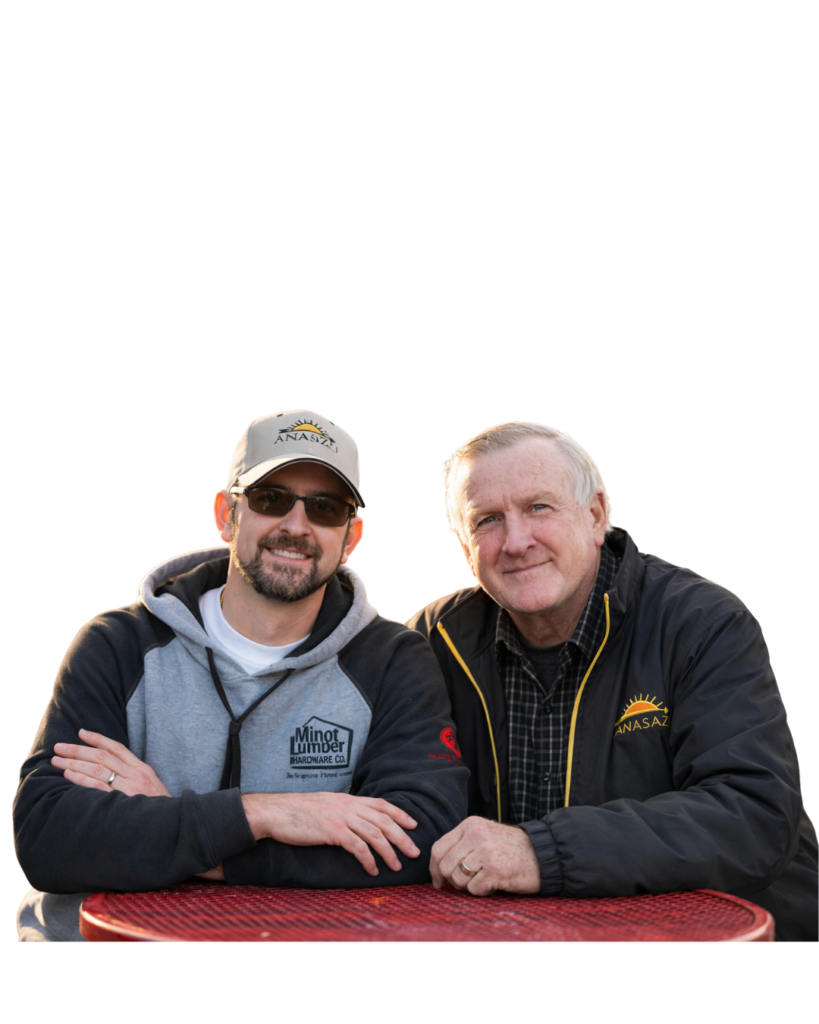
John & Stephen Worlund — father and son
"So much is built upon our character."
— John Worlund, Anasazi Builders
The Full Journey
Total: typically 8 to 10 months from your first phone call to the day you move in. The time spent in the first six stages — before construction even starts — is what makes the build go smoothly. It’s not wasted time. It’s the work that prevents the problems.
01
Stage One
Stage 01 of 09
The First Conversation
Phone or email · 30 to 60 minutes · No fees, no commitment ever
Everything starts with a conversation. You call us, or you send an email, and one of us — usually John — calls you back. We listen. We ask questions. We try to understand what you’re picturing.
What we’re really doing in this first conversation is figuring out two things: whether what you have in mind is something we can genuinely help with, and whether we’re the right fit for each other. John calls this the “dating” phase, and the analogy is more accurate than it sounds. We’re going to spend the next 8 to 10 months working closely together. Both sides need to be comfortable that the relationship is going to work.
We don’t push, we don’t pitch, and we don’t ask you for a deposit at the end. If we get off the phone and you’re not sure yet, that’s fine. If we don’t think we’re the right builder for what you have in mind, we’ll tell you that, too. We’d rather lose a project up front than build the wrong project for the wrong client.
What to expect in this stage
- Free phone or email conversation — no upfront cost
- Honest discussion about your land (or land you’re considering)
- Discussion of rough budget range and lender pre-approval status
- Initial questions about what you’re picturing, your timeline, and your family
- If we’re a fit, we schedule a site visit. If we’re not, we’ll tell you honestly.
02
Stage Two
Stage 02 of 09
Single site visit · 30 to 60 minutes on-site · Free
If you have land, we go look at it. If you’re still searching for the right property, we can help you evaluate options before you buy — and that conversation alone has, more than once, saved a client from buying a lot they thought was great but had problems we caught early.
On-site, we’re looking at a lot of things at once. Where the home should sit. Which way it should face. How the driveway runs. Where the septic system goes if you’re not on city sewer. Where the well goes if you’re not on city water. Whether the lot drains properly when it actually rains. What setbacks the city or county requires. What the HOA allows, if there is an HOA.
We’ve done this on lots of every kind — subdivision lots inside Pasco, Kennewick, and Richland; raw acreage in the Benton City to Prosser corridor; hillside lots above the valley; rural agricultural land transitioning to residential. The site visit tells us what we’re working with
What to expect in this stage
- John walks the lot with you in person
- Optimal house placement identified
- Septic system layout assessed (if applicable)
- Well feasibility discussed (if rural)
- Utility connection points and access evaluated
- Drainage, grading, and setback constraints documented
- If still searching: guidance on what to look for and what to avoid
03
Stage Three
Stage 03 of 09
Plans & Design
2 to 6 weeks · With our architects or yours · 3D renderings included
Now your home starts to take shape. There are three ways into this stage, and any of them works.
First, you can bring your own architectural plans. We review them, work with our architects to make sure they’re buildable on your specific lot, and adapt anything that needs to be adjusted.
Second, you can choose from the 500+ plans we have available and modify them however you want. The plans are starting points — layouts get redrawn, rooms move, ceilings change, exteriors transform. Within a few rounds, the home is unrecognizable from where it began.
Third, you can design from scratch with our architects. Some clients come with a sketch on a napkin. Some come with a Pinterest board. Some come with nothing but ideas and a budget. All are valid starting points.
After your blueprints are approved, we provide 3D renderings so you can see your finished home on your specific lot before construction begins. If something doesn’t look right in the rendering, we adjust before anyone breaks ground.
What to expect in this stage
- Choose your design path: bring your plans, modify ours, or design from scratch
- Plans tailored to your specific lot, septic, and permitting situation
- Multiple rounds of design adjustment as needed
- 3D renderings provided after blueprint approval
- Pricing implications discussed honestly at every design decision
04
Stage four
Stage 04 of 09
The Sacred Session
Single 2–3 hour session · You and your family · The most important meeting
This is the meeting that matters most, and we don’t skip or shortcut it. We sit down with you — both of you, if it’s a couple, with the kids if they’re old enough — and we walk through every decision in the home. Roof type. Exterior material. Windows. Flooring by room. Cabinetry. Countertops. Appliances. Bathroom fixtures. Lighting. Trim profile. Paint colors. Garage configuration. Outdoor living. All of it.
But that’s not actually what the meeting is for. The meeting is for finding what we call “the sacred.” Every family has things in their home that matter more than everything else. A reading nook by the south-facing window. A primary bath that feels like the spa they always wanted. A heated garage. A real wood-burning fireplace. A kitchen island big enough for the whole family to sit at.
As we walk through every decision, we’re listening for the one or two things that, if we get them right, you’ll love this house for the next 30 years — and if we get them wrong, no amount of square footage will make up for it. Once we know what’s sacred, we build the rest of the home around protecting those things in the budget. That’s the entire purpose of the session.
What to expect in this stage
- Every finish decision in the home walked through
- Your 1–2 sacred items identified and protected in the budget
- Honest discussion of trade-offs and priorities
- No ‘standard’ selections — every choice is yours
05
Stage five
Stage 05 of 09
Value Engineering & The Real Number
2 to 3 weeks · Subcontractor quotes · The honest total
Now we go get the real numbers. We send your specific scope — your floor plan, your selections, your finishes — to every subcontractor on our team. They each come back with detailed quotes for their portion of the build. We assemble those into the actual total cost of your home. Not an estimate. Not a guess. The real number.
Then we do something we call the upside-down paper exercise. John writes the actual total on a piece of paper, face-down. You and your spouse each write what you think it’s going to be. Everyone flips at the same time. There’s no theater to it — it’s a way of making sure the price conversation is honest, that nothing is padded, and that you and we are seeing the same thing at the same time.
If the number is higher than your budget, this is where we do the actual value engineering work. We don’t push you to spend more. We work with you to find the best version of your home inside the number that works for you. The sacred items stay in the budget. Everything else is on the table.
WHAT TO EXPECT IN THIS STAGE
- Detailed quotes collected from every subcontractor on your specific scope
- Real total assembled — no estimates, no padded margins
- Upside-down paper exercise to ensure honest pricing
- Value engineering performed if needed, protecting your sacred priorities
06
Stage six
Stage 06 of 09
Contract & Pre-Construction
1–2 weeks signing · ~30 days lender finalization · $3,000 down
When the number is honest and we’re aligned on scope, we sign the contract. There are two documents. The first is the construction contract itself. The second is a 10-page specifics document that lists every single included item and every single excluded item in your build.
It’s detailed. It’s specific. And it exists for one reason: so that nothing is in dispute later. When something isn’t in the home and the homeowner thinks it should be — the 10-page document settles it. We don’t hide behind contract language. We just write down what we agreed to in plain English so that everyone can refer back to the same source of truth.
$3,000 down activates the contract. Then there’s typically a 30-day window while your lender finalizes your construction loan. We use this time to handle the next stage — permits.
WHAT TO EXPECT IN THIS STAGE
- Full construction contract signed
- 10-page specifics document detailing every included and excluded item
- $3,000 down payment to activate the contract
- Construction loan finalization (~30 days, working with your lender)
- Permit applications submitted during this window
07
Stage seven
Stage 07 of 09
Permits & Site Preparation
Up to 3 weeks permits · Site prep follows · We handle all paperwork.
We handle every permit. Building permit, septic permit, well permit if applicable, any other county or city documentation. You don’t call the permit office. You don’t fill out forms. You don’t track the application. We do all of that.
City permits in the Tri-Cities — Pasco, Kennewick, or Richland — typically take up to 3 weeks from plan submission. Unincorporated lots in Franklin County or Benton County can run slightly longer. For rural lots needing septic permits through the Benton-Franklin Health District, we may need additional time for soil percolation tests.
Once permits are approved, site prep begins. Depending on your lot, this could include clearing, grading, driveway construction, well drilling, septic system installation, and bringing power to the building site. On a finished subdivision lot, this stage is brief. On raw acreage, it can be a substantial portion of the overall scope.
WHAT TO EXPECT IN THIS STAGE
- All permit paperwork submitted and tracked by us
- City or county permits typically take up to 3 weeks
- Septic permit (Benton-Franklin Health District) if rural lot
- Site prep: clearing, grading, driveway, well, septic, power as required
- Foundation prep work begins
08
Stage eight
Stage 08 of 09
Construction
Average 5 to 6 months · Recent build: 4 months · Weekly updates throughout
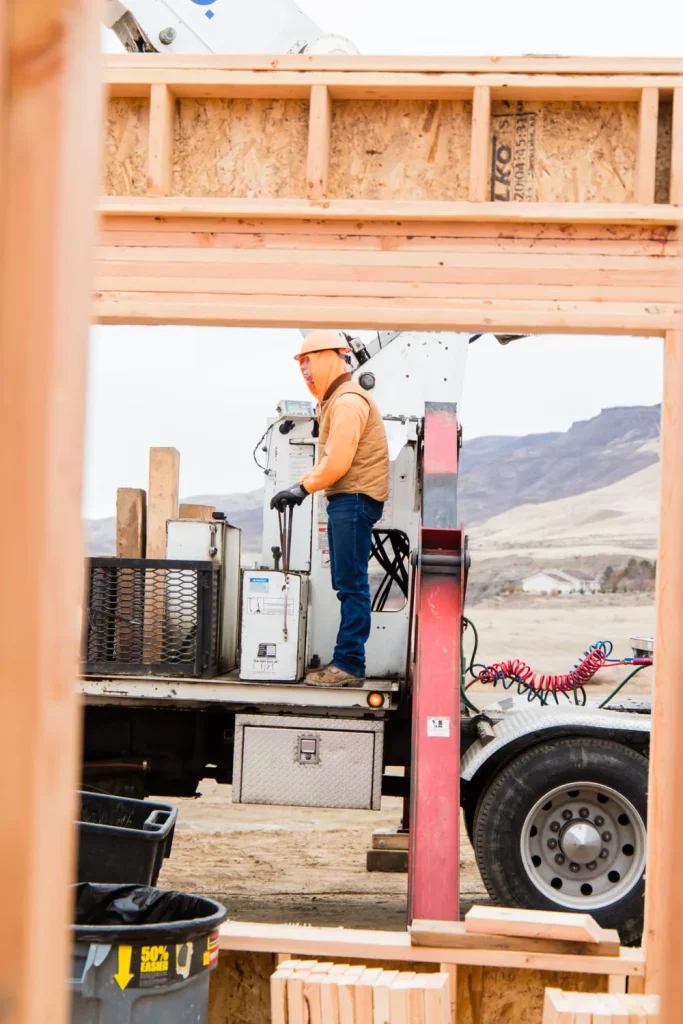
This is where the home actually gets built. The slab gets poured. Framing goes up. The roof goes on. Mechanical systems — plumbing, electrical, HVAC — get rough-installed. Insulation, drywall, paint. Flooring goes in. Cabinets and countertops are set. Trim and finish work. Final mechanical. Final inspections.
Average build time once the slab is poured is 5 to 6 months. Our most recent home was completed in 4. The big national builders quote 12 to 18 months for a custom home. That’s their reality, not ours. We’re smaller, we’re hands-on, and our subcontractor team has worked together for nearly a decade as a unified crew.
John or Stephen is on-site regularly throughout construction. Communication is consistent. We send updates, we send photos when something significant happens, and we don’t go quiet between milestones. You won’t be guessing what’s happening on your job site — if you call us, we answer.
The job site itself is always clean. Materials stacked, waste removed, nothing scattered. More than once, somebody has chosen us specifically because they drove past one of our active job sites and saw how it was being run.
WHAT TO EXPECT IN THIS STAGE
- Slab, framing, roof, mechanical systems, insulation, drywall, finish work
- Average duration: 5 to 6 months once foundation is poured
- John or Stephen on-site regularly throughout construction
- Weekly updates and milestone photos
- Clean job sites — always
- One point of contact (John) for the entire build
09
Stage nine
Stage 09 of 09
Delivery, Walkthrough & Beyond
1 walkthrough day · 1-year base warranty · 6-month follow-up · Friendship that lasts
When the home is finished, we walk through every room with you. Every finish, every fixture, every system. We want to make sure that what we’re handing over is something you’re genuinely proud to call your home — not just done, but actually right. If anything isn’t, we deal with it before we sign off.
You get the keys, a complete contact list for every subcontractor in the build (so if anything ever needs attention, you have a direct line), and your warranty paperwork. Washington State requires a 1-year base warranty, and we honor that fully. Beyond the base warranty, we operate on a 6-month follow-up schedule for non-emergency items — you keep a list, we come fix it, no charge.
And then there’s the part that doesn’t fit on a process diagram. After we hand over your home, the relationship doesn’t end. John has described it like this: “It’s like dating — at a certain point you either quit or you get married, and we become friends for the next 8 to 10 months. In 3 years, we’re friends, we do barbecues.” That’s the real ending of this process. The home is yours. The friendship is real.
WHAT TO EXPECT IN THIS STAGE
- Full walkthrough of every room with you
- Final inspections coordinated with city or county
- Move-in-ready delivery: fully completed and cleaned
- Subcontractor contact list provided at handover
- 1-year base warranty (WA State law) — honored in full
- 6-month follow-up for non-emergency items — you list, we fix
- Extended 2–5 year warranty available
- Lifetime relationship beyond the build
Three Things You Should Know Going In
01
You don’t need to have everything figured out.
Many people delay calling a builder because they think they need blueprints and a locked budget first. You do not. Our first conversation is simply to see where you are and map out the next realistic steps. If you do not know what you need yet, that is normal. We are here to help you.
02
Pricing is honest because it is built around your budget.
There is no single square-foot price for a custom home. Your cost comes from your specific lot, design, and finish choices. We always start with what your lender has pre-approved. We do not push your numbers up, but help you build the best version of your home within what works for you
03
You work with the exact same person from day one
Many people delay calling a builder because they think they need blueprints and a locked budget first. You do not. Our first conversation is simply to see where you are and map out the next realistic steps. If you do not know what you need yet, that is normal. We are here to help you.
The Cost Conversation
There is no honest way to give a square-foot price on a fully custom home, and any builder who tries is selling you a number, not a house. The cost depends entirely on the choices you make: a simple kitchen versus a fully outfitted gourmet one, composite shingles versus standing seam metal. The structure is the same square footage. The cost is dramatically different.
Our entry point in the Tri-Cities starts around $450,000 for a basic home with land. We don’t do per-square-foot pricing. We don’t use Build & Price calculators. We do the actual math, on your actual project, with quotes from the actual subcontractors who will build it. Then we’re honest about it.
-FAQ
Everything You Want to Know Before Your First Call
These are the real questions families ask us. Every answer traces back to John’s actual words — nothing invented.
Where do I start when I want to build a custom home?
Start with a phone call or an email. You don’t need plans, you don’t need a finished lot, and you don’t need a finalized budget. The first conversation costs nothing and commits you to nothing — it exists to help both of us figure out what your realistic next steps are.
How long does it take to build a custom home?
In the Tri-Cities, our average is 8 to 10 months from your first phone call to the day you move in. Construction itself averages around 5 to 6 months — our most recent home was completed in 4. Larger national builders quote 12 to 18 months. That’s their reality, not ours.
What are the phases of building a custom home?
Our process has 9 stages: First Conversation, Property Evaluation, Plans & Design, the Sacred Session, Value Engineering & The Real Number, Contract & Pre-Construction, Permits & Site Preparation, Construction, and Delivery & Walkthrough. Most of the work happens before construction begins — that’s what makes the construction phase go smoothly.
Do I need to own land before contacting you?
No. Roughly half of our clients come to us already owning their land, and roughly half are still searching. If you’re still looking, we can help you evaluate parcels before you buy and tell you what the site development implications are. We don’t sell our own lots, but we know the Tri-Cities market well enough to help you avoid lots that have problems.
Do you sell house plans or have a plan book I can buy?
We don’t. If you’re looking for a downloadable house plan, you’ll want to look at services like ePlans or HousePlans.com. Our work is fully custom — we design for your specific lot and your specific family, not as a standalone plan. If you have a stock plan you bought elsewhere and want a builder to construct it on your land in the Tri-Cities, we’re happy to talk about it.
What's the difference between custom and design-build?
‘Custom’ describes what the home is — designed and built around you, not pulled from a catalog. ‘Design-build’ describes how the project is structured — design and construction handled by the same team. We do both: we build fully custom homes, and we do design-build for clients who want one team handling design and construction together.
How much does it cost to build a custom home in the Tri-Cities?
Our entry point starts around $450,000 for a basic home with land. From there, the cost depends entirely on your design, lot, and finish choices. We start every budget conversation with what your lender has pre-approved and work within that number.
What if my lot doesn't have utilities?
That’s common in the rural Tri-Cities and the Benton City to Prosser corridor, where we’ve completed six homes on raw acreage. We handle full site development on raw land — power extension, well drilling, septic system installation, grading, and clearing. The site development becomes its own component of the budget, and we’re honest about both numbers before you sign anything.
What does the warranty look like?
Washington State requires a 1-year base warranty on all new construction, and we honor that fully. Beyond that, we operate on a 6-month follow-up schedule for non-emergency items. For emergencies, we provide direct subcontractor contact numbers at delivery for the fastest possible response. Extended warranties of 2 to 5 years are also available.
Let's build the home
you're actually picturing.
Free first conversation. No pressure. Just a chance to see if we’re the right fit for what you have in mind.
Call us: (509) 412-2107
Email: john@anasazibuilders.com

Family-owned custom home builder serving the Tri-Cities, WA since 2014. Father and son. 80 years experience. 250+ homes built.
License no. ANASABL825RL