

The clearest warning signs are structural rather than personal: no firm turnkey price, a demand for a large deposit before work starts, reluctance to put inclusions and exclusions in writing, and a bid noticeably below the others with no explanation. Any one of them is worth pausing over.
The short version
- A builder who will not commit to a total price is telling you something.
- Large upfront draws are the structure behind most disappearance stories.
- Verbal agreements are not protection. Everything belongs in the specification.
- An unexplained low bid usually means missing scope, not efficiency.
- Verify the license on Washington’s L&I lookup before signing anything.
What is the biggest red flag when hiring a builder?
The absence of a firm turnkey price. Without a fixed total and a written specification, there is nothing to hold the builder to, and the cost has no ceiling. This is the single most common complaint John Worlund hears from people who come to him after a bad experience elsewhere.
“The main thing is overcharging, underbidding and then charging extras, and not being clear, and not having a set turnkey price,” he says. “Instead the job just goes on and on and they get charged more and more.”
Ask directly whether the contract is fixed price or cost plus. Under cost plus you reimburse actual costs plus a fee, and the total is not known until the last invoice clears. Many lenders will not finance that structure at all, which tells you how the banks see the risk.

Why are large upfront draws dangerous?
Because money paid ahead of work completed is money you cannot get back. A payment schedule tied to construction progress keeps the builder’s incentive aligned with finishing. A schedule weighted toward the front does the opposite, and it is the structure behind nearly every story of a builder who took a draw and vanished.
Anasazi’s out-of-pocket schedule runs 10 percent to start, then 20 percent each at concrete, framing, drywall, and after trim and painting, with the final 10 percent at Certificate of Occupancy.
“We do not take fifty percent draws,” John says. “We try to make it very based upon the work progress.”
On bank-financed builds the protection is structural: the lender sends an inspector to verify completed line items before releasing each draw.
What happens when this goes badly wrong?
Anasazi has been called in more than once to finish homes another builder abandoned, in the Tri-Cities and in North Dakota after the Minot flooding. In the second case the pattern got bad enough that banks stopped lending to outside contractors entirely, and Anasazi was one of very few they still trusted.
“The builder took the money and ran,” John says. “Got his draw, ordered things, left the country, and left the people sitting there with unpaid material and an unfinished house. And we were able to step in and help them finish it.”
The homeowners in those situations had done nothing unusual. They had signed reasonable-looking paperwork with someone who seemed fine. What was missing was a progress-based draw schedule and a firm price, which is why those two items are worth insisting on even when the builder seems trustworthy.
Anasazi’s standing with one bank was such that, in John’s words, they were in the right-hand drawer, and the only outside builder that lender would fund.
What smaller warning signs are worth noticing?
Reluctance to put things in writing. Vague answers about how many homes the builder has completed. No past clients you can speak with. A price meaningfully below the others with no explanation. Dismissiveness when you ask hard questions. And pressure to decide quickly on a project that will take ten months.
None of these proves anything alone. Together they form a pattern.
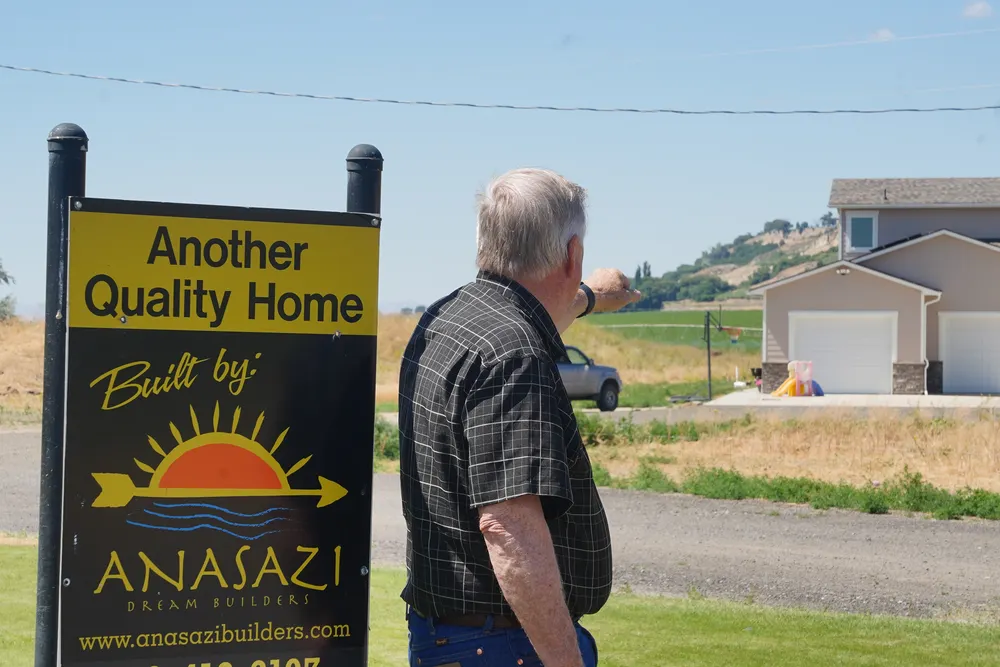
One more is easy to check and rarely checked: go look at an active job site. Materials scattered, waste blowing around, no sign of organization. Homeowners have chosen Anasazi Builders specifically because they drove past a site and saw the opposite.
Use the same framework to compare the builders who remain on your list, then take a consistent set of questions into every interview.
What should you insist on before signing?
Four things. A fixed turnkey price. A written specification listing every included and excluded item. A draw schedule tied to construction progress. And references you can actually call, including past homeowners.
Add lien waivers to the list. Your bank will require them on anything over $5,000, and they prevent a subcontractor from placing a lien on your finished home over a payment dispute you were never part of.
Verify the license too. Every Washington contractor is registered with Labor & Industries, and the record shows license status, bond, and insurance. The official Washington L&I verification tool makes that check straightforward.

Common questions about builder warning signs
Is a low bid always a red flag?
No, but an unexplained one is. Ask what makes it possible. A specific answer is reassuring; a vague one is not.
What deposit is normal?
Anasazi activates a contract with $3,000 down. Requests for a large percentage before work begins deserve scrutiny.
Should I worry if a builder is very busy?
No. A booked schedule is usually a good sign. Worry about a builder who is always immediately available and cannot say why.
What if I have already signed with a builder I now doubt?
Read your contract carefully, particularly the termination and payment terms, and consider getting legal advice before acting.
Can a builder finish a job another builder abandoned?
Yes. Anasazi has done it more than once, taking over pricing the remaining work and verifying what material was actually ordered.
Most of this comes down to insisting on a firm number and a written specification before anyone starts. Anasazi’s process is documented stage by stage, and the first conversation is free if you want to test the questions on someone. You can also review what a fully custom home includes.