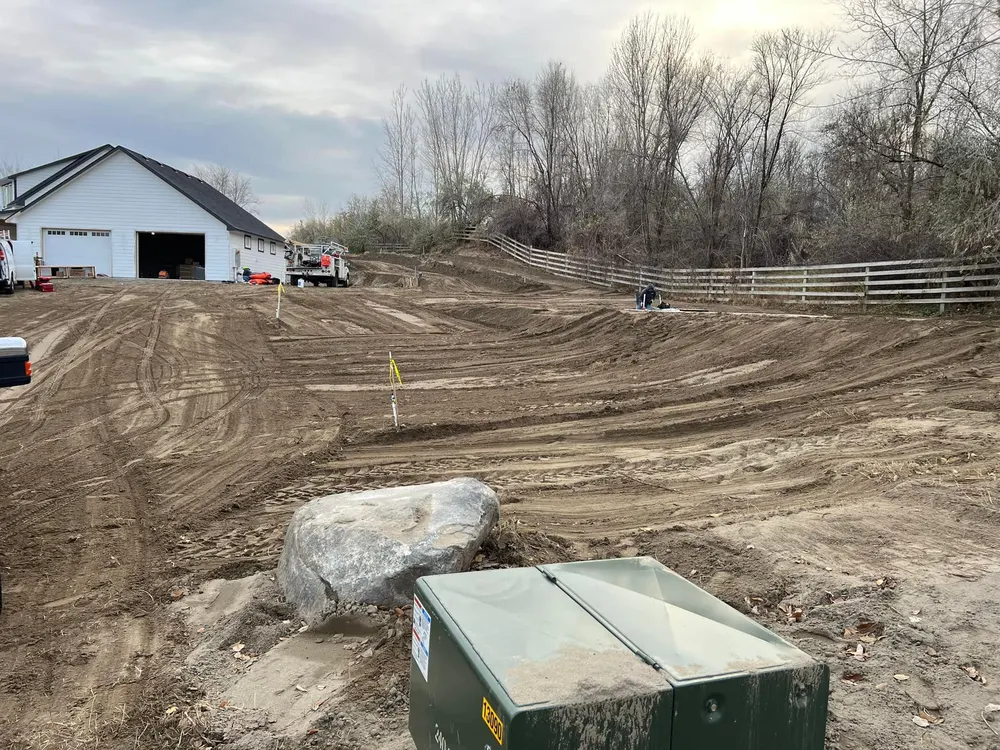
Six things: water supply, septic feasibility and perc test results, how far power has to be brought, legal and physical access, zoning, and slope. All six are part of the code and permitting process, and any one of them can stop a build before it starts.
The short version
- Talk to a builder before you buy. The site visit is usually free.
- A parcel you cannot legally reach cannot be financed or built on.
- No city water means a well. No sewer means a septic permit and likely a perc test.
- Power distance can be the largest single line on a rural site budget.
- Slope, drainage, and setbacks decide where the house can actually sit.
What are the six things to verify on any lot?
Water, septic, power, access, zoning, and slope. John Worlund confirms every item on that list is part of the code and permitting process rather than a nice to have, which means a problem with any of them becomes a permit problem rather than a preference.
| Check | What you are confirming |
|---|---|
| Water | City water available, or a well is required |
| Septic | Sewer available, or septic feasibility and a perc test |
| Power | How far utilities must be brought, and at what cost |
| Access | Legal and physical access, including easements and crossings |
| Zoning | That a residence is permitted on the parcel |
| Slope | Buildable area, drainage, and grading requirements |
“Those are all part of the code, part of the permitting process,” John says.
Get answers before you sign, not after. The site visit is free whether you own the land or are still deciding.
Why is access the check people skip?
Because it looks obvious from the road and frequently is not. A parcel needs a legal right of access rather than merely a driveable path, and easements, private roads, and crossings can each carry a permission you do not automatically hold as the owner.
The version John tells involves eleven acres and a railroad.
“Some people bought eleven acres and didn’t know that they had to have a permit from Burlington Northern Railway to be able to cross the railroad tracks to that property. And the bank would not loan to them without that permit, and Burlington Northern was not forthcoming with the permit.”
No access meant no financing. No financing meant no house, on land they already owned.
Confirm the access is recorded, not assumed. If a crossing or a shared road is involved, find out who controls the permission before the money moves.
What do water and septic actually decide?
Whether the lot can support a house at all, and how much of your budget goes underground before anything visible happens. No city water means drilling a well. No sewer means a septic system, which requires a permit and, on most rural lots here, a soil percolation test before a design can be approved.
The septic answer also shapes the house. On lots outside municipal sewer, the system’s location takes up a significant share of the buildable area, which affects where the home can sit.
Sequence matters too. In most Tri-Cities jurisdictions you cannot get a building permit without a septic permit first, unless the lot is already on city sewer.
How much does the site work cost?
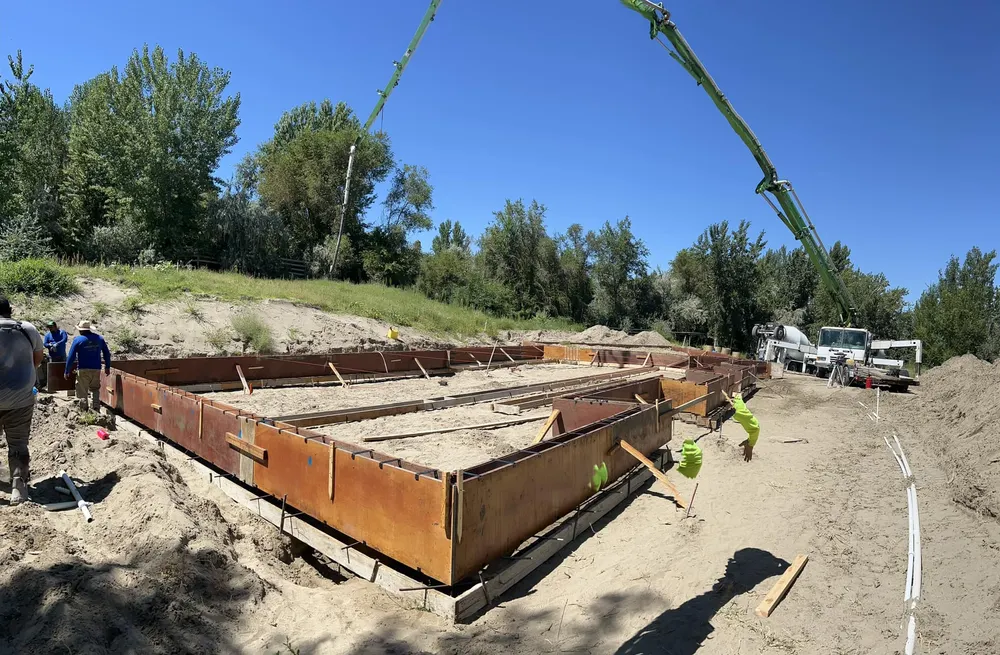
It depends entirely on what the lot already has, and on a finished subdivision lot with utilities stubbed in it is minimal. On past Anasazi projects a well ran up to about $19,000 for roughly 270 feet, a gravity-flow septic system $10,000 to $14,000, and an engineered system $14,000 to $25,000.
Three things set a well’s price: drilling depth, pipe diameter, and pump size. Septic cost moves with the ground, the code, house size, and what the health district requires.
These are examples from past projects, not a quote or estimate. Power extension is priced separately by the utility district, and on a remote parcel it can be the largest single line.
There is no honest all-in figure for raw acreage, because most of what that question is really asking about is the price of the land itself.
Who should look at the land before you buy?
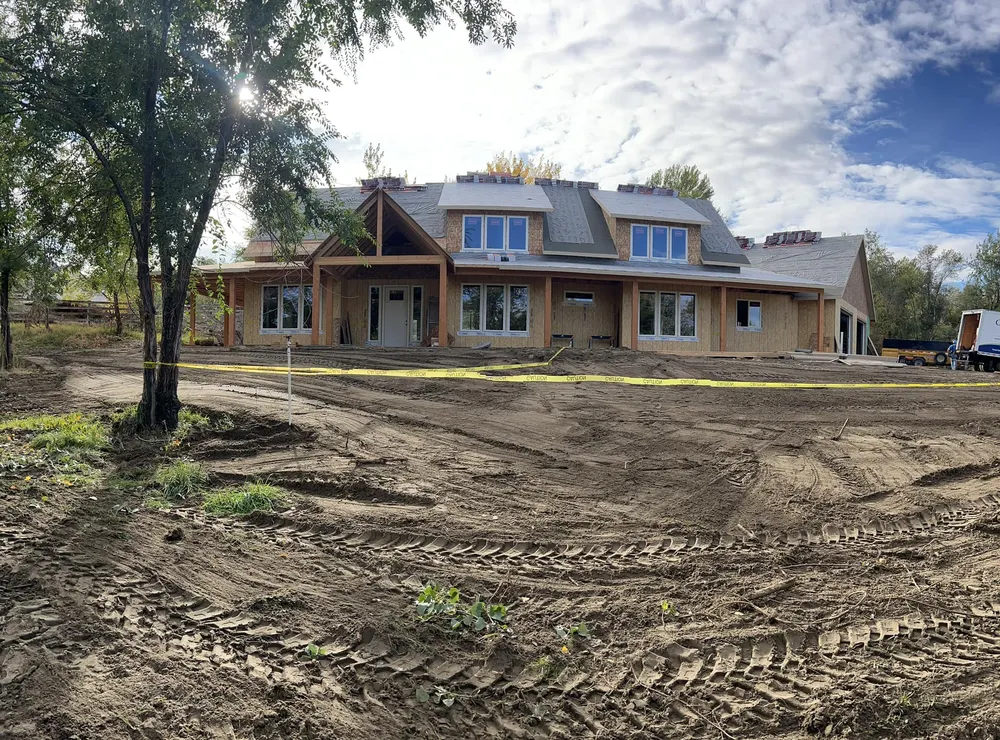
A builder, ideally, and at Anasazi it costs nothing. Anasazi walks parcels for people who have not purchased yet, and that conversation has more than once kept someone from buying something that looked fine on paper.
What John is looking at during that visit: optimal house placement, septic siting, well feasibility, utility connection points, drainage, grading, setbacks, and any HOA envelope restrictions.
Bring the parcel number and any documents you have. Anasazi builds throughout the Tri-Cities, including the rural corridors where these questions matter most.
Common questions about buying land to build on
Can I make an offer contingent on these checks?
Discuss contingency language with your realtor or attorney. It is a common way to buy time for due diligence.
Who pays for a perc test?
Typically the buyer or seller by negotiation. Ask whether one has already been done on the parcel.
Does the county tell me if a lot is buildable?
Planning departments can tell you about zoning and permit requirements. They will not evaluate the site for you.
What if the lot already has a well and septic from a previous structure?
They may or may not be usable. Age, condition, capacity, and location all matter, and they should be inspected early.
How long does this due diligence take?
The site visit is an hour. Perc testing and utility inquiries take longer, which is why starting before you are under contract helps.
The cheapest hour in this entire process is the one spent walking your lot with a builder before you own it. Ask for that visit, read how the build process runs, or learn where John and Stephen’s experience comes from.