

Less changes on the construction side than most people expect, and more changes on the paperwork side. Crews build through Tri-Cities winters. The seasonal variable that genuinely moves timelines is permitting, where summer vacation coverage at city and county offices can add a week or two to approvals.
The short version
- Construction continues year-round in the Tri-Cities.
- Summer slows permits, which is the opposite of what most people assume.
- Site work on raw land is the piece most affected by weather.
- Cold-climate building experience shows up in the envelope, not the calendar.
- Start when your financing is ready rather than waiting for a season.
Does construction stop in the winter here?
No. Tri-Cities winters are cold but manageable, and crews work through them. Framing, roofing, mechanical rough-in, drywall, and finish work all continue. What changes is sequencing around specific weather days rather than the overall schedule.
For perspective on what a genuinely difficult climate looks like, Anasazi has built in Fairbanks, Alaska, and in North Dakota. Those jobs set the standard for what an envelope has to do.
“We’ve built houses here in Tri-Cities and Boise, Idaho, McCall, Idaho, North Dakota, Fairbanks, Alaska,” John Worlund says.
That experience shows up in insulation and air-sealing habits rather than in how a winter schedule gets written.

What season actually affects your timeline?
Summer, through the permit office. Vacation coverage at city and county departments can slow approvals by a week or two, and nothing on the builder’s side prevents it. County permits already run about four weeks against one to three weeks in a typical city, so a summer county submission is where waits can stack up.
“It just depends on the time of year, vacation season,” John says of permit timing.
If your build hinges on a specific move-in date, this is the variable to plan around. One Tri-Cities city offers an expedited option at roughly $700 for a two- to three-day turnaround, which is worth asking about.
Which work is genuinely weather dependent?
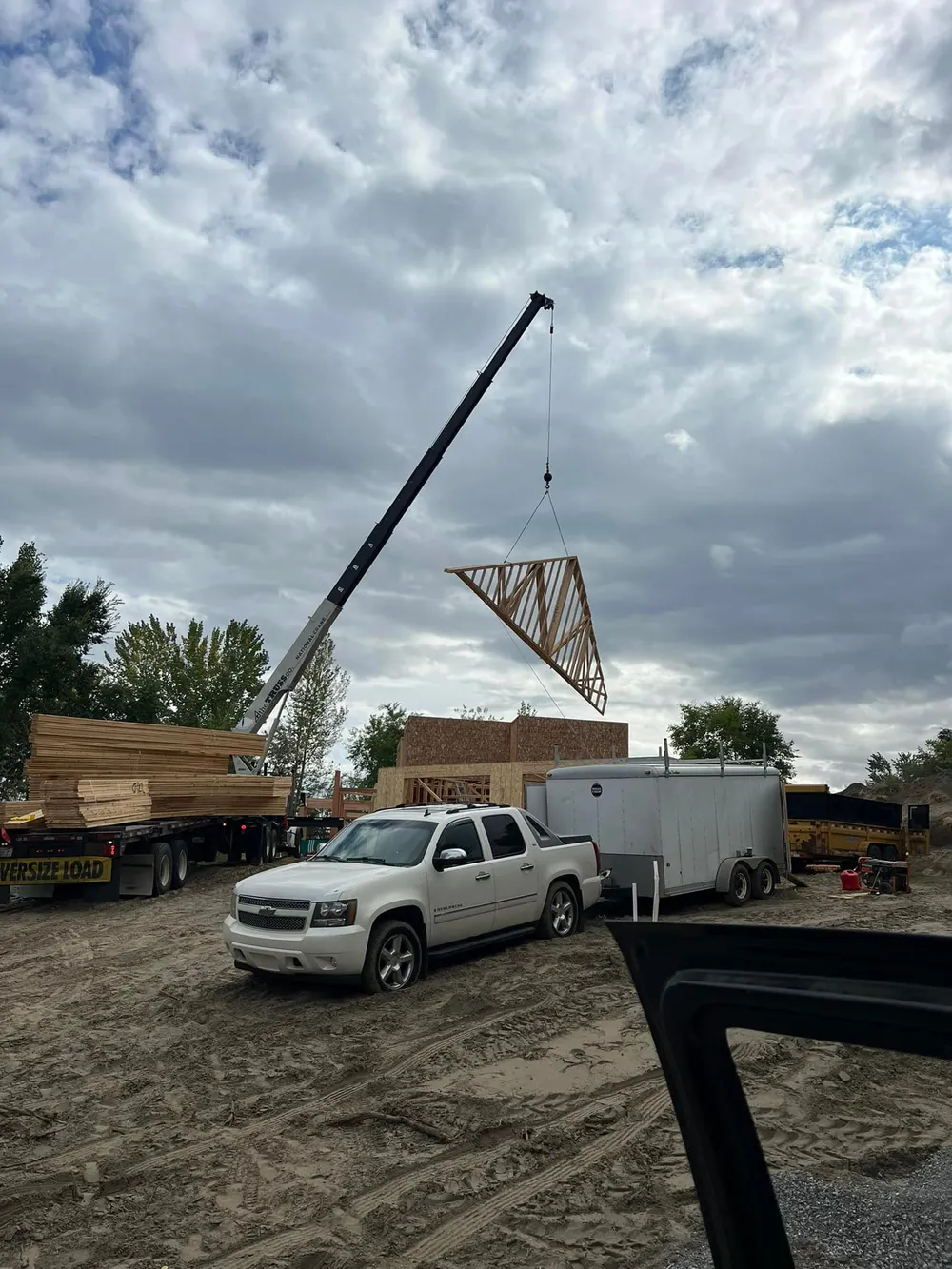
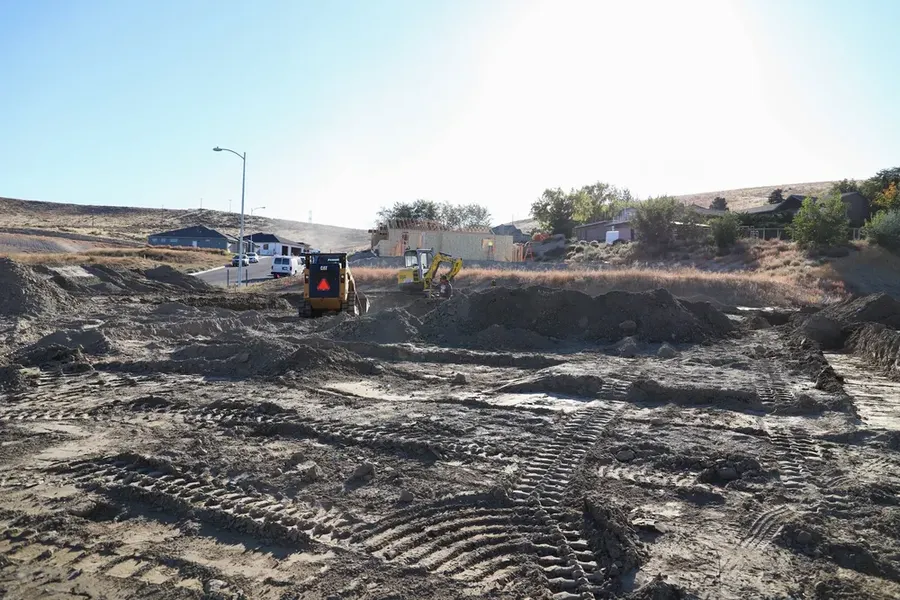
Site development, mostly. Excavation, grading, foundation pours, and driveway work are the pieces that care about saturated ground and hard freezes. On a finished subdivision lot with utilities stubbed in, this is a short window. On raw acreage needing a well, septic, and power extension, it is a larger share of the project.
Concrete work in particular needs temperature management, which experienced crews handle routinely rather than treating as an obstacle.
Once the structure is dried in, weather stops mattering much. Most of a build’s duration happens under a roof. Browsing our project gallery shows how well-coordinated construction progresses smoothly throughout every season.
When should you actually start?
When your financing is in order and your decisions are close to settled. Waiting for a season usually costs more time than the season would have. Since the full journey runs 8 to 10 months, whatever month you start in, your build will pass through several seasons anyway.
The sequence that matters more than weather is lender pre-approval, then design, then selections, then pricing across roughly thirty contacts, then permits. While seasonal conditions may alter daily pacing, the underlying home building process remains strictly ordered.
Anasazi has never needed a timeline penalty clause, which John attributes to always finishing ahead of the quoted date, and that record spans builds started in every month of the year. Partnering with a dedicated custom home builder in Tri-Cities ensures your timeline stays firm regardless of the start date.
Common questions about seasonal building
Is it cheaper to build in a particular season?
Material and trade pricing move with demand rather than a predictable seasonal discount. Ask your builder what they are seeing currently.
Will winter weather damage materials on site?
Properly stored and protected materials are fine. This is one more reason job-site organization matters.
Does snow delay a Tri-Cities build?
Occasionally by days, rarely by weeks. It affects site work more than interior progress.
Should I avoid submitting permits in July?
If your schedule is tight, factor in the extra week or two. If it is flexible, it matters less.
Does the energy code change anything seasonally?
No. Compliance requirements apply year-round and add roughly $20,000 to $30,000 regardless of when you build.
The best month to start is the one where your financing and your decisions are ready. When you are ready to start your project, find out where you stand in a free first conversation, read the nine-stage process, or learn where Anasazi has built.