
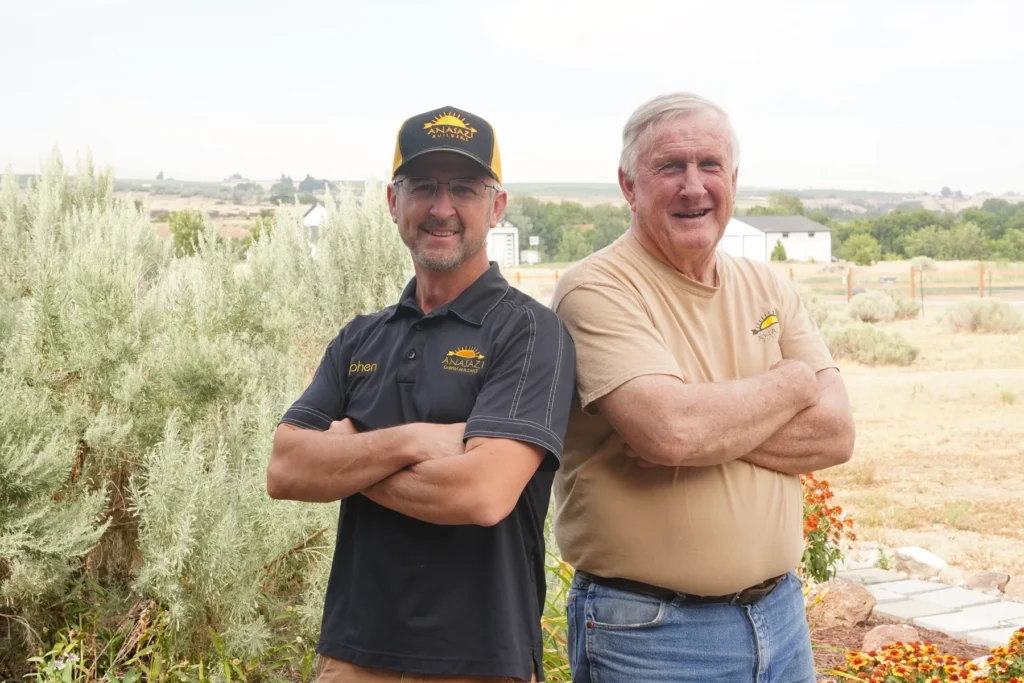
Establish one point of contact before the build starts and use it. At Anasazi that is John, from the first phone call through the day you get keys, and you never coordinate subcontractors yourself. Agree on update frequency up front, and raise concerns the day you notice them.
The short version
- Ask who your contact is and whether that person changes mid-build.
- One number beats being routed between project managers.
- Agree on update frequency at the start, then hold to it.
- Raise problems the day you see them, not at the next milestone.
- Decisions delivered promptly are the most useful thing you can contribute.
Who should you actually be talking to?
One person, for the entire build. At Anasazi it is John Worlund from first contact to handover, and you never call an electrician, a plumber, or a framer yourself. He and Stephen coordinate the team of nearly twenty trades on your behalf.
“They don’t have to handle with all the subcontractors,” John says. “We’re the only point of communication.”
That matters most against larger builders where clients get passed between project managers, and the person who listened to your vision in month one is not the person handing you keys in month ten.
Ask this question in the first meeting. Ask specifically whether your contact changes at any stage.
How often should you hear from your builder?
Often enough that you are never guessing what is happening on your job site. Agree on the cadence at the start, whether that is a weekly call, photos at milestones, or a standing site visit. What matters more than the format is that it does not go quiet between stages.
Anasazi sends updates and photos when something significant happens, and John or Stephen is on site regularly.
Some of the most useful communication happens in person and outside the job site entirely. Selections often get made at the plumbing, electrical, and flooring supply houses, because most people cannot picture a tile from a catalog.
“It’s visual, it enables someone to make that choice or make that pick,” John says.

What should you raise, and when?
Anything that looks wrong, on the day you notice it. A misplaced outlet is a five-minute fix before drywall and a considerably larger one afterward. Saving concerns for a scheduled milestone conversation converts small corrections into real work.
The same applies to decisions. If you are stuck between two options, say so early rather than going quiet, because a trade may be waiting behind that choice.
If you want something changed, ask for the price and the schedule impact together, before any work starts. Those are two separate answers and a good builder gives you both.
What does good communication look like from the builder’s side?
Telling you unwelcome things immediately rather than managing them quietly. The clearest example in Anasazi’s own history is a client who wanted substantial changes six weeks into a build. John got off the roof, drove to where the husband was, and told him in person that it would add two months and about thirty percent.
The husband decided to proceed. The estimate landed almost exactly where John said it would.
Nothing about that conversation was comfortable. It happened the same day, in person, before a dollar was spent, which is the standard worth expecting.
You can test for this before hiring. Ask a builder to describe a project that went wrong and how the client found out.

Common questions about builder communication
Can I visit the job site whenever I want?
At Anasazi, yes. Regular visits also mean you catch things early.
Should I put requests in writing?
Yes for anything affecting scope, price, or schedule. Casual conversation is fine for everything else.
What if my builder stops responding?
Raise it directly and early. Responsiveness during the build predicts responsiveness during the warranty year.
Who do I call after move-in?
At delivery Anasazi provides contact numbers for every subcontractor, so genuine emergencies reach the trade directly rather than routing through the builder.
Is it reasonable to ask for weekly updates?
Yes. Agree on the cadence at the start so expectations match on both sides.
The best predictor of how a build feels is how the first few conversations go. Start one with Anasazi at no cost, read the nine-stage process, or learn who John and Stephen are and what a fully custom home includes.