
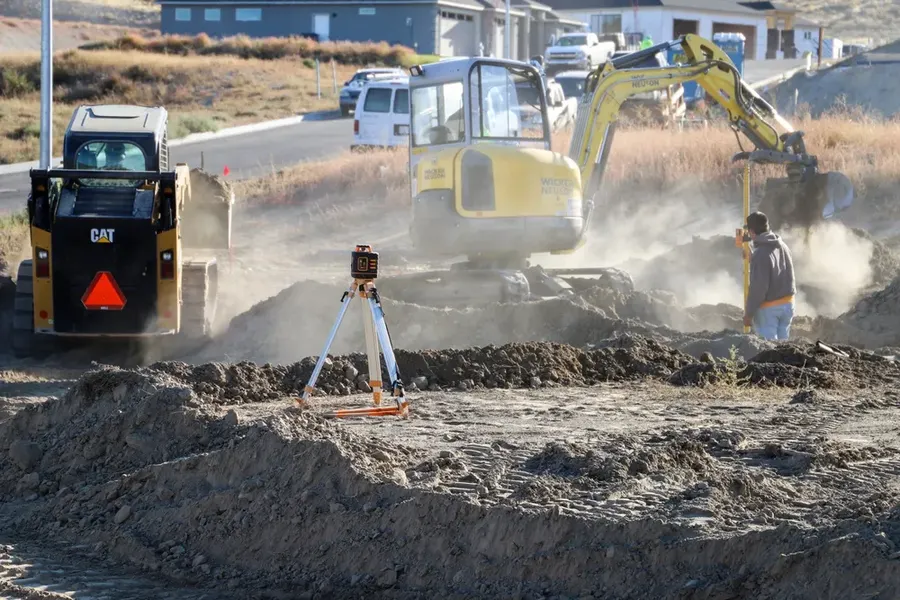
Raw acreage needs three things brought to it before a house can go up: water, waste, and power. That means drilling a well, installing a septic system, and extending utilities from the nearest connection point, plus clearing, grading, and a driveway. It is a second budget, separate from the house.
The short version
- Site development is its own budget. Ask for two numbers, not one.
- A well, a septic system, and power extension are the three big items.
- In most jurisdictions here, no septic permit means no building permit.
- County permits run about four weeks against one to three weeks in a city.
- An experienced builder can sometimes renegotiate utility costs. It is worth asking.
What does raw land actually need before you can build?
Water, waste disposal, and power, in some form. Without city water you drill a well. Without sewer you install a septic system, which requires its own permit and usually a soil percolation test. Power gets extended from the nearest connection point, which on a remote parcel can be the largest single cost.
Then comes the physical preparation: clearing, grading, and a driveway that meets whatever the jurisdiction requires for access.
Anasazi has done all of it. Six completed homes sit in the Benton City to Prosser corridor, every one on raw land where power, wells, and septic systems went in before a wall went up.
“We’ve gone from raw land and put in the electric power, the septic systems, the wells,” John Worlund says.
The build-on-your-lot process is documented here.
How much does site development cost?
It depends almost entirely on what is already there. A finished subdivision lot with utilities stubbed in needs very little. A parcel with nothing needs everything, and the difference between those two situations is tens of thousands of dollars.
| Item | Range on past Anasazi projects |
|---|---|
| Well | Up to about $19,000 for roughly 270 feet |
| Septic, gravity flow | About $10,000 to $14,000 |
| Septic, engineered | About $14,000 to $25,000 |
| Power extension | Priced by the utility district |
| Final grading around the house | Included in the build |
| Landscape grading | Not included |
Three factors set a well’s price: drilling depth, pipe diameter, and pump size. Septic cost moves with the ground conditions, the code, the size of the house, and what the health district requires.
These are examples from past projects, not quotes or estimates. There is no honest all-in figure for raw acreage, because most of what that question is really asking about is the price of the land itself.
Can a builder reduce site development costs?
Sometimes, and the savings can be substantial. On a ten-lot development across ten acres in Benton City, the utility wanted $45,000 up front from the landowner before power could be brought in at all.
John negotiated a restructure.
“I spoke with them and worked out a plan where the ten lots were charged forty-five hundred apiece, and they would be charged that when it was permitted to build.”
A $45,000 barrier became $4,500 per lot, payable at permit time rather than in advance.
Anasazi then dug the ditches for the power lines and boxes, the Benton Franklin Power District laid the lines, and Anasazi buried and closed it back in. Each five-acre parcel proceeded individually from there: wells drilled, plans developed, and bidding across roughly twenty subcontractors.
That story is about advocacy rather than construction, and it is a fair question to ask any builder you are considering.
How much time does raw land add?
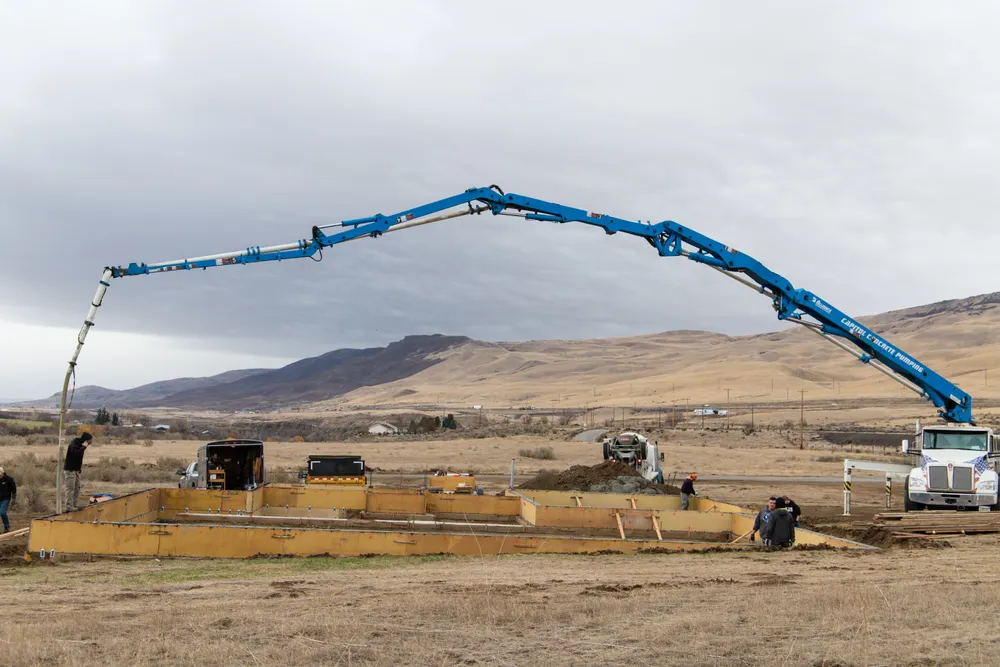
Weeks on the permit side and a variable amount on the physical side. County permits run about four weeks against one to three weeks in a typical city, and rural land adds plot-plan work, well and septic documentation, and utility coordination that a defined city lot does not need.
In most Tri-Cities jurisdictions you cannot obtain a building permit without a septic permit first, unless the lot is already on city sewer. That sequencing is what stretches rural timelines rather than the drilling itself.
The overall journey still runs 8 to 10 months, with 5 to 6 months of construction. Site development sits in the front half alongside design and permitting.
Where in the Tri-Cities does this come up most?
Outside city limits, particularly in the Benton City to Prosser corridor along the Horse Heaven Hills and Red Mountain area, and on agricultural land in Franklin County transitioning to residential use. Those parcels are typically scenic, dry, and wind exposed, which affects framing decisions in ways a sheltered city lot does not.
Anasazi has six completed homes in that corridor and knows the county permit process, the soil conditions, and the typical well and septic picture for it.
Anasazi builds across the region, including West Richland hillside lots and rural Burbank under Walla Walla County jurisdiction.
Common questions about building on raw land
Is raw land cheaper overall?
The parcel usually costs less than a finished lot. Site development absorbs part or all of that difference, which is why two budgets matter.
Can I do the site work myself?
Well drilling and septic installation require licensed specialists. Clearing and some grading can sometimes be owner arranged, but discuss it before assuming.
What if my land already has a well and septic?
They may be usable depending on age, condition, capacity, and location. Have them inspected and evaluated early rather than assuming either way.
Does a builder handle the utility coordination?
At Anasazi, yes, including permits with the city or county and coordination with licensed drillers and the utility district.
How do I know if my parcel is a good candidate?
Ask for a site visit. It is free, and it is the fastest way to find out what your lot actually needs.
If you own raw acreage or are looking at some, the site visit answers most of these questions in an hour. Ask for one, read the nine-stage process, or learn about the family who has been doing this for decades.