
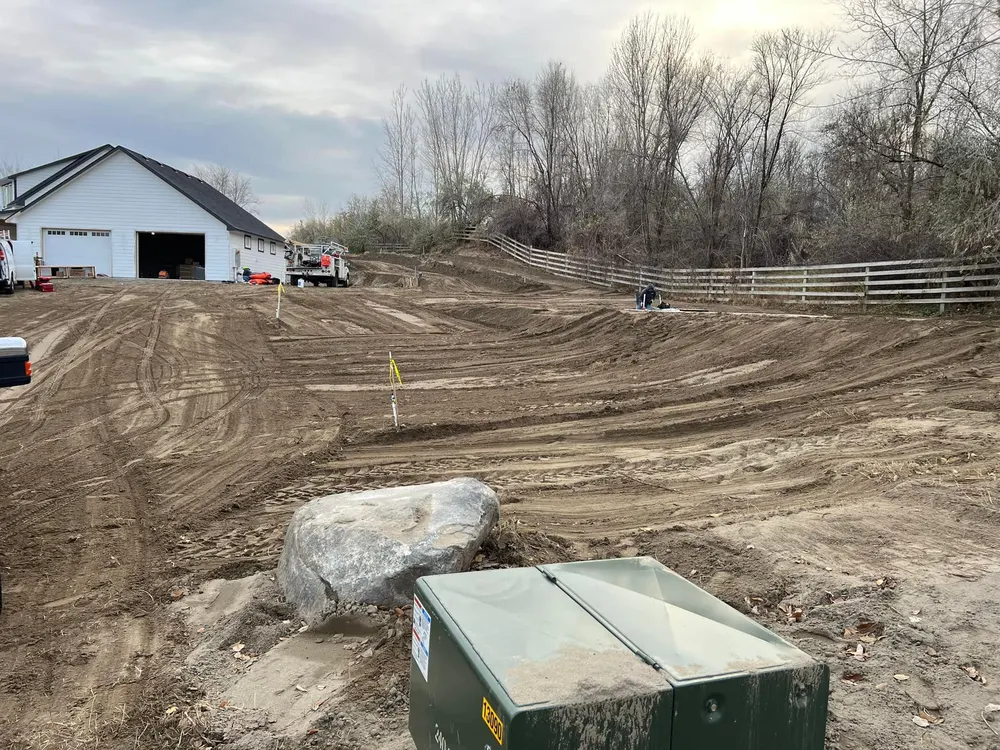
In most Tri-Cities jurisdictions, yes. If your lot is not connected to city sewer, the septic permit has to be in hand before the building permit will be issued. The exception is a lot already on city sewer, where the question does not arise.
The short version
- No city sewer means the septic permit comes first, always.
- Septic permits here go through the Benton-Franklin Health District.
- Most rural lots need a soil percolation test before a design is approved.
- The septic location shapes where the house can sit, so it affects design too.
- A lot on city sewer skips this entirely.
Why does the septic permit have to come first?
Because a jurisdiction will not authorize a dwelling it cannot confirm has legal waste disposal. Approving the septic system establishes that the lot can support a house at all, so the building permit depends on it rather than running alongside it.
John Worlund states the rule plainly: no building permit without a septic permit, unless the lot is in a subdivision already on city sewer.
The practical consequence is sequencing. Any delay in septic approval pushes the building permit, which pushes the start of construction.
What does getting a septic permit involve?
A site evaluation and, on most rural lots here, a soil percolation test performed by a licensed engineer. The Benton-Franklin Health District requires perc results before it will approve a septic design, since how quickly water drains through your soil determines what system the lot can support.
That result also determines cost. A gravity flow system has run about $10,000 to $14,000 on past Anasazi projects, while an engineered system has run $14,000 to $25,000, driven by ground conditions, code, house size, and health district requirements.
Those are examples from past projects, not a quote or estimate for a new parcel.
If your parcel has never had a perc test, expect that step to be recommended before design begins.
How does septic affect the house itself?
More than people expect. On lots outside municipal sewer, the system’s placement takes up a meaningful share of the buildable area, which constrains where the home can sit, how the driveway runs, and which direction the house faces.
That is why a site evaluation happens before design rather than after. Anasazi walks the lot first, identifies septic siting alongside house placement, and designs around what the land actually allows.
Getting this order wrong is expensive. A floor plan drawn without knowing where the drain field goes may not fit the lot it was drawn for.
What if the lot already has a septic system?
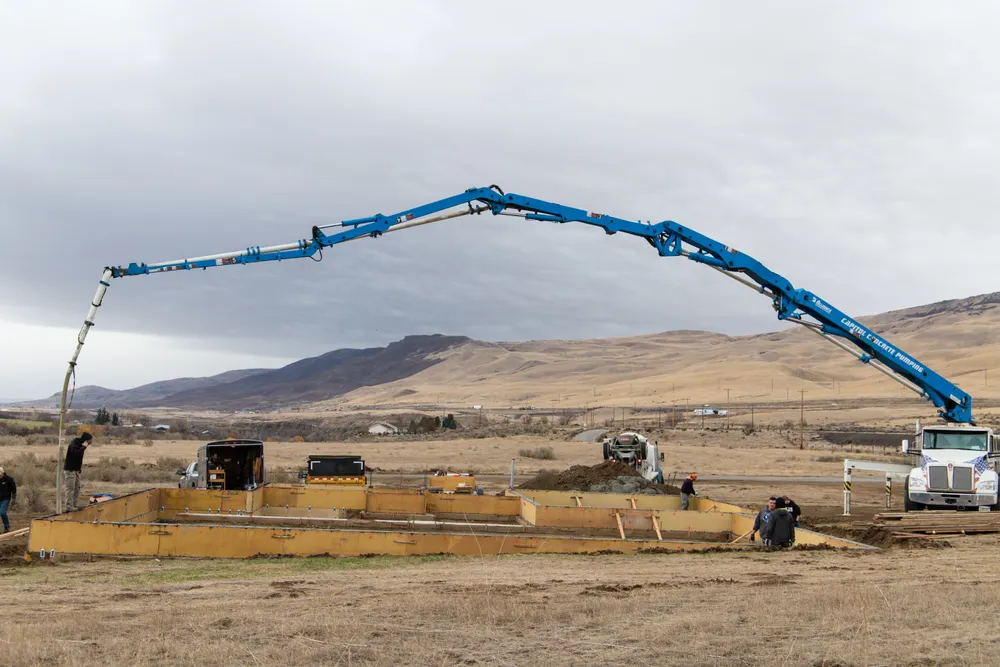
It may be usable, depending on age, condition, capacity, and location relative to the new house. Have it inspected and evaluated early. A system sized for a previous structure will not necessarily serve a larger home, and the health district decides that rather than the seller.
Anasazi evaluates existing systems during the site visit and includes any upgrade or replacement in the site development budget before design begins.
Common questions about septic permits
Who applies for the septic permit?
Your builder. Anasazi handles all permit paperwork including septic, well, and building permits.
How long does septic approval take?
It sits inside the overall permit window, which runs one to three weeks in a typical city and about four weeks in the counties. Perc testing adds time ahead of that.
Who pays for the perc test?
Typically the buyer or the seller by negotiation. Ask whether one has already been done on the parcel.
Can I install septic before buying the land?
No. Confirm feasibility before purchase instead, which is what a site evaluation is for.
Does a city lot need any of this?
A lot connected to city sewer does not. It still carries sewer, water, and electric hookup fees.
If your lot is outside city limits, the septic answer decides your timeline and part of your floor plan. Ask for a site visit, read the nine-stage process, or see where Anasazi builds.