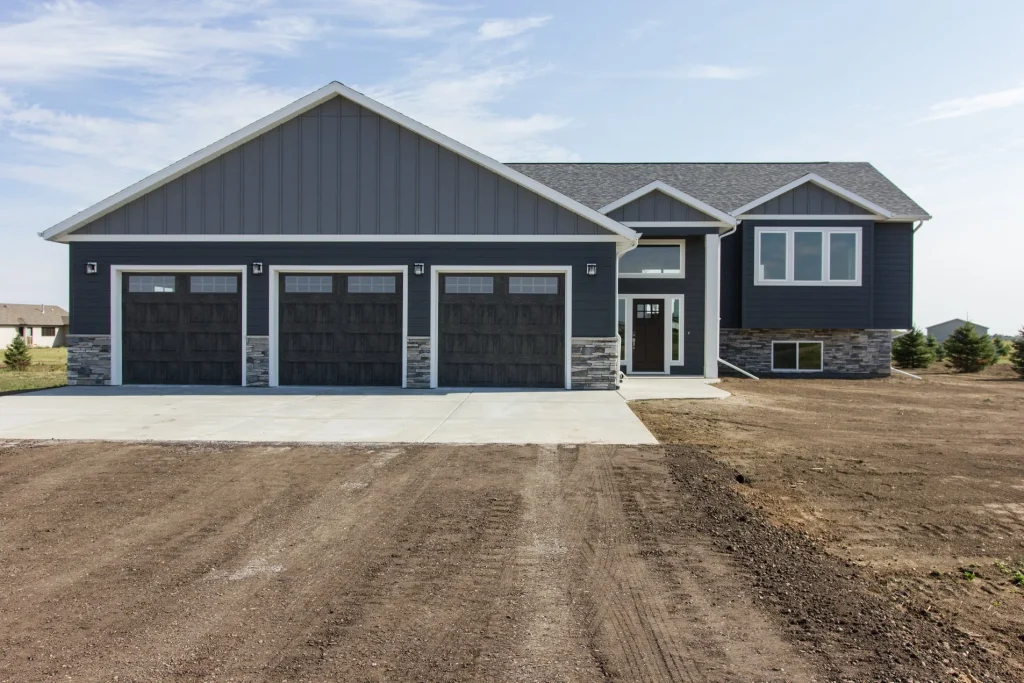
These are two different buyers and neither choice is wrong. Building on your own land means about 20 percent down, involvement in every decision, and land costs evaluated up front. Buying a finished spec home means roughly 3 percent down, no involvement in the build, and changes purchased as extras.
The short version
- Construction loan: about 20 percent down. Spec home purchase: about 3 percent.
- Building means every decision is yours. Buying means none of them are.
- On your own land you evaluate water, power, and access before anything starts.
- Most builders build a sufficient home. Much of the choice comes down to price and involvement.
- Wanting to be away from a subdivision is a legitimate reason on its own.
What is the practical difference between the two?
Money up front, involvement, and who handles the land questions. The comparison is cleaner side by side than in prose.
| Decision | Custom on your land | Buying a spec home |
|---|---|---|
| Down payment | About 20% of total cost | About 3% |
| Buyer involvement | Every decision | None in the build |
| Land costs | Evaluated up front: water, power, access, road | Already handled |
| Changes | Designed in from the start | Purchased as extras from a charge sheet |
| Purchase path | Land plus build, financed through builder and bank | Typically through a realtor |
That down payment gap is the item that most often changes someone’s plan, and most people do not know about it until they are already attached to a design.
Who is each option actually right for?
Building suits people who want something specific and are willing to make several hundred decisions to get it, including people who already have land or want to be away from a subdivision. Buying suits people who want a finished house on a known timeline without becoming part of the process.
John Worlund describes one common profile directly.
“One client wants to be separated from a subdivision, wants land, wants room, maybe already has it from parents.”
He is also fair about the alternative rather than dismissive of it.
“Unless it’s something blatantly bad, most home builders are going to build a sufficient home, and it really comes down to the price.”
That is a builder declining to disparage the other option, which is worth noting when every other page you read is selling you one side.
What does owning the land change?
The arithmetic and the sequence. The roughly $450,000 entry point for a custom home in the Tri-Cities assumes land is part of the package, so if you already hold your lot free and clear you are asking about a different number.
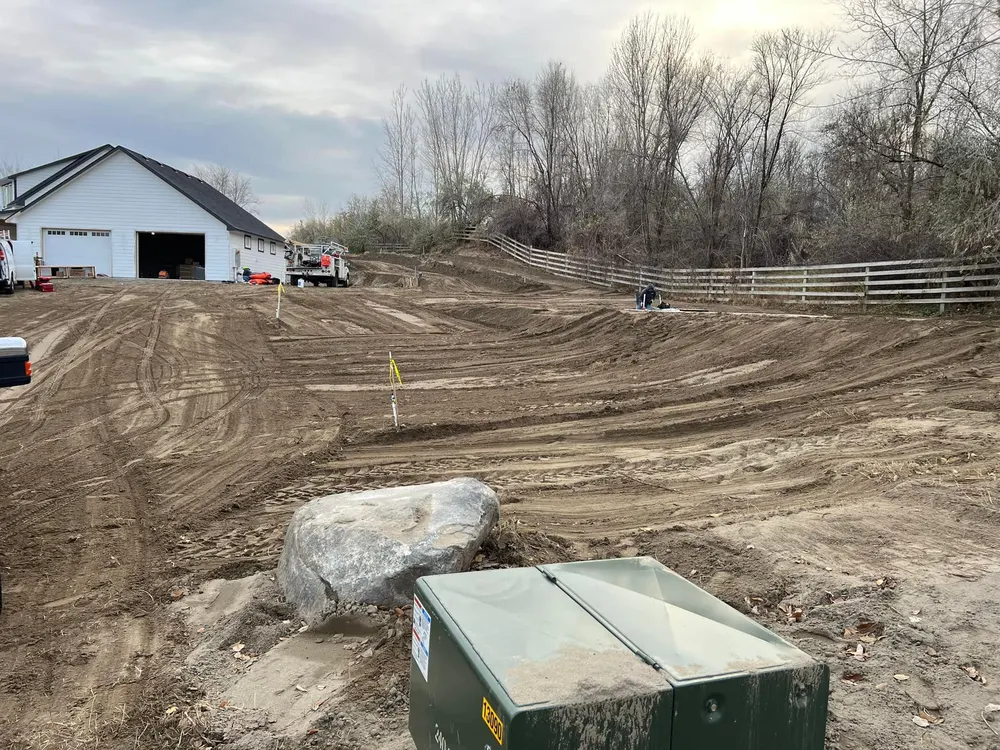
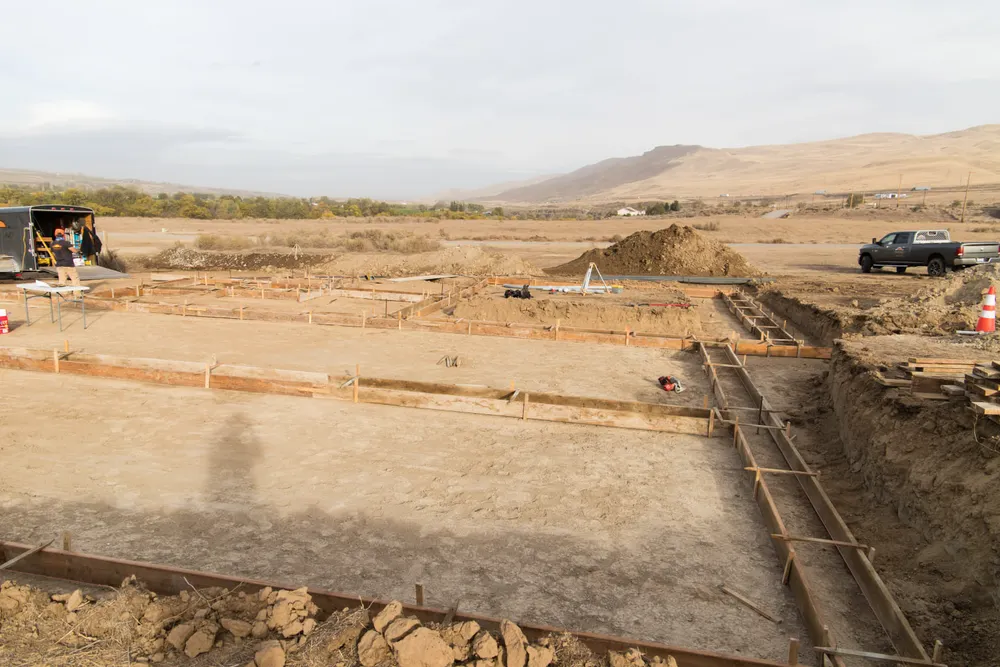
Two conditions apply. Your land must be paid off before construction, and if a balance remains, the first item out of the construction loan clears it. Undeveloped land also carries a second budget for the well, septic, power extension, clearing, and grading.
A finished subdivision lot with utilities stubbed in needs very little of that. Raw acreage needs all of it.
What do you give up by buying finished?
Control over the decisions, mostly, and the ability to design around your own lot. A spec home was designed before you arrived, so changes become extras selected from a builder’s charge sheet rather than choices made during design.
You also skip the land evaluation entirely, which is a genuine benefit if you do not want to think about perc tests and power distance.
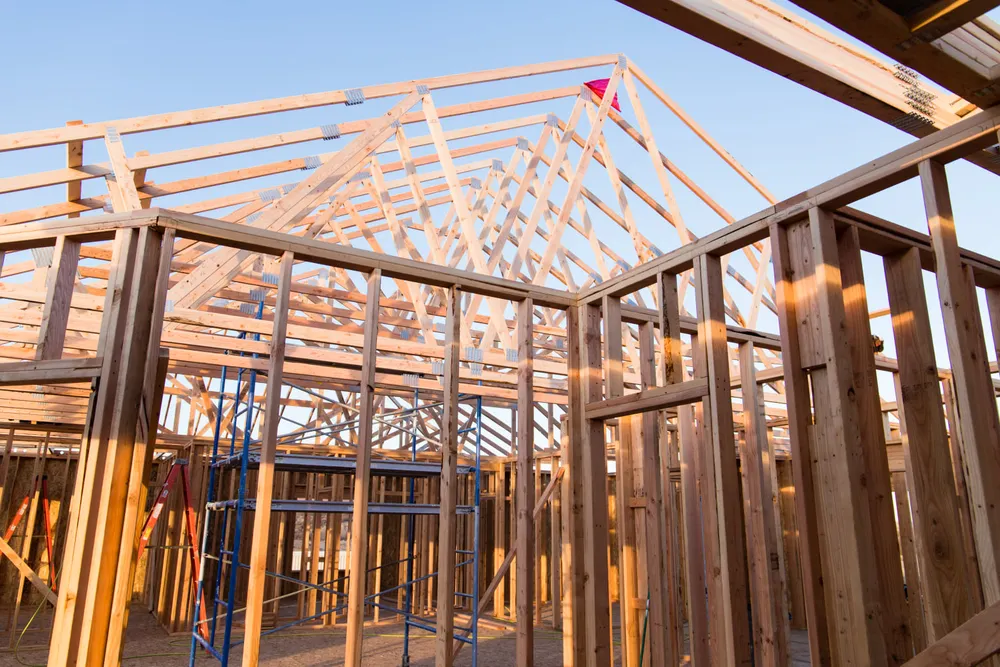
What you gain by building custom is that every finish, layout, and orientation decision is yours. At Anasazi that extends to bringing your own plans, starting from one of more than 500 on file, or designing from nothing.
How long does each take?
Buying finished is a closing timeline, typically weeks. Building runs 8 to 10 months from signed contract to move in, with 5 to 6 months of that being construction and the rest design, pricing, selections, and permitting.
If your move date is fixed and near, that difference matters more than anything else on this page.
If it is flexible, the timeline is rarely the deciding factor.
Common questions about building versus buying
Can I buy land and build later?
Yes, though remember the land must be paid off before construction begins.
Is building always more expensive?
Not necessarily, but the up-front cash requirement is higher and the site costs on rural land are real.
Can I customize a spec home before it is finished?
Sometimes, from the builder’s option list and priced as extras. It is a narrower kind of choice than a custom build.
Do I need land before contacting a builder?
No. About half of Anasazi’s clients are still searching, and involving a builder during the search is usually cheaper than after.
What if I want land but cannot afford to build yet?
Buying the parcel first is a legitimate path. Have a builder look at it before you commit.
Both choices work for the right person. If you are weighing them for a specific lot or budget, a free first conversation sorts it out faster than more reading. Anasazi builds throughout Pasco, Kennewick, Richland, and the surrounding rural areas, and the process is documented here.